Navigating the Capital: A Comprehensive Guide to the WMATA Map
Related Articles: Navigating the Capital: A Comprehensive Guide to the WMATA Map
Introduction
With great pleasure, we will explore the intriguing topic related to Navigating the Capital: A Comprehensive Guide to the WMATA Map. Let’s weave interesting information and offer fresh perspectives to the readers.
Table of Content
Navigating the Capital: A Comprehensive Guide to the WMATA Map

The Washington Metropolitan Area Transit Authority (WMATA) map, a ubiquitous symbol of the nation’s capital, serves as the essential guide for navigating the sprawling network of Metro stations and lines that connect the District of Columbia, Maryland, and Virginia. Understanding its intricacies is crucial for both residents and visitors seeking to explore the city’s diverse neighborhoods, cultural attractions, and bustling commercial centers.
Deciphering the Map: An Overview
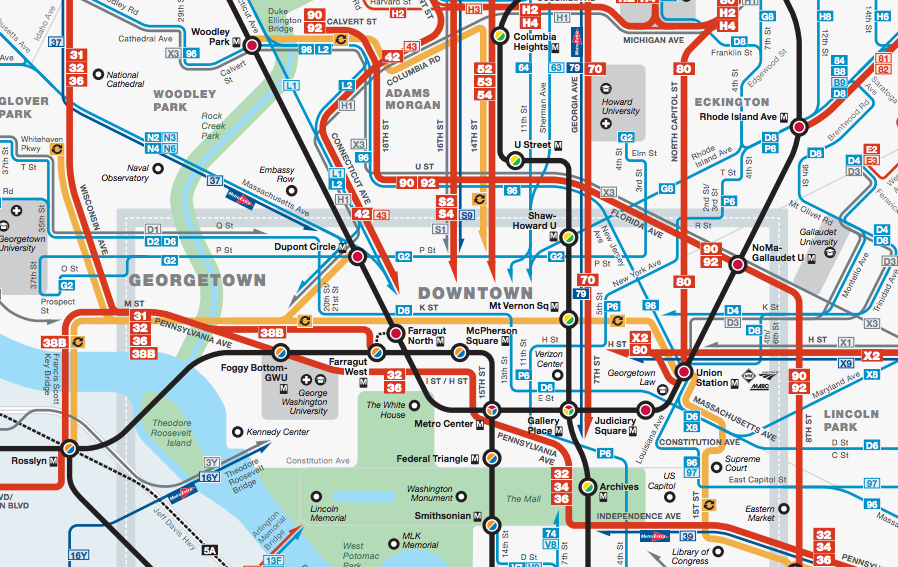
The WMATA map, a visual representation of the Metro system, is a testament to the complexity and interconnectedness of the region. Its vibrant colors, distinct line designations, and strategically placed station symbols provide a clear roadmap for commuters and tourists alike.
Key Features and Elements:
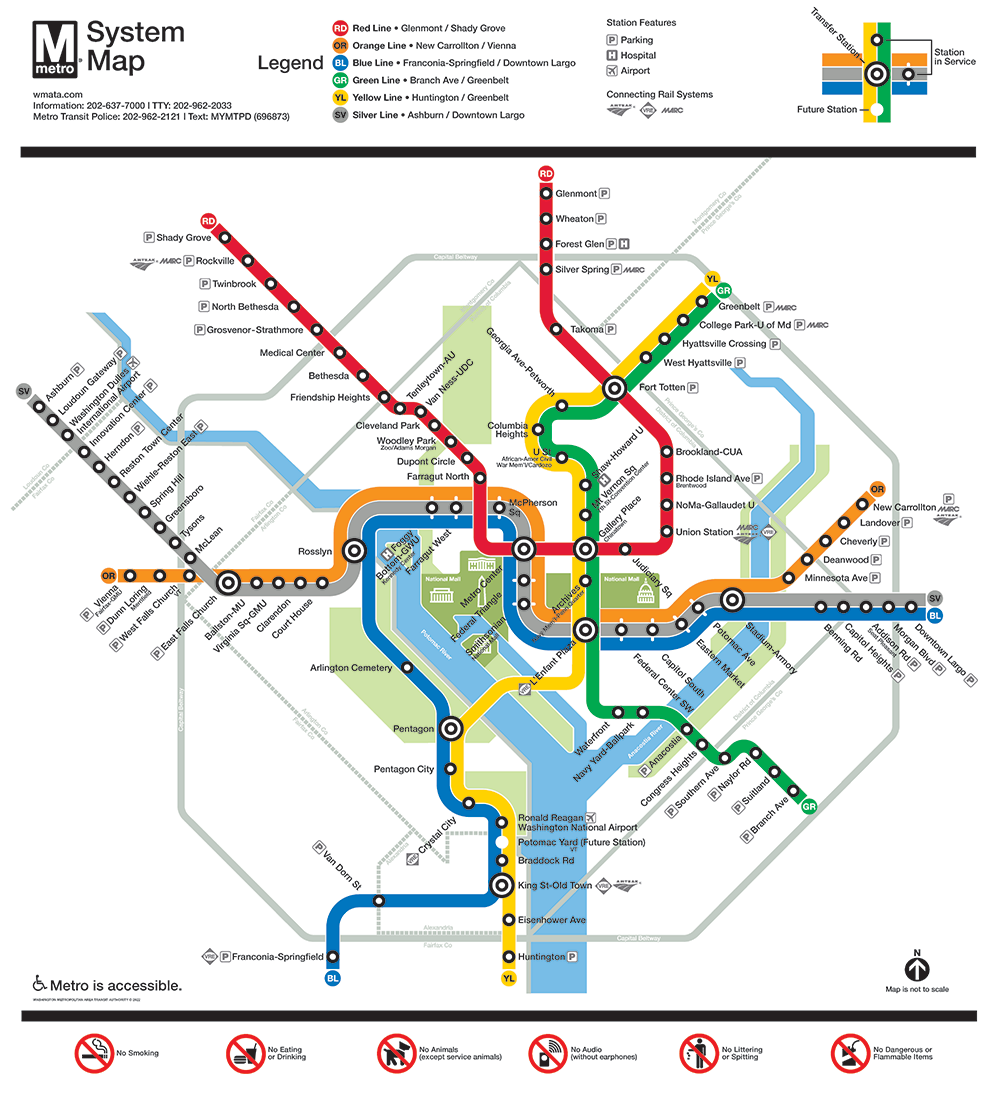
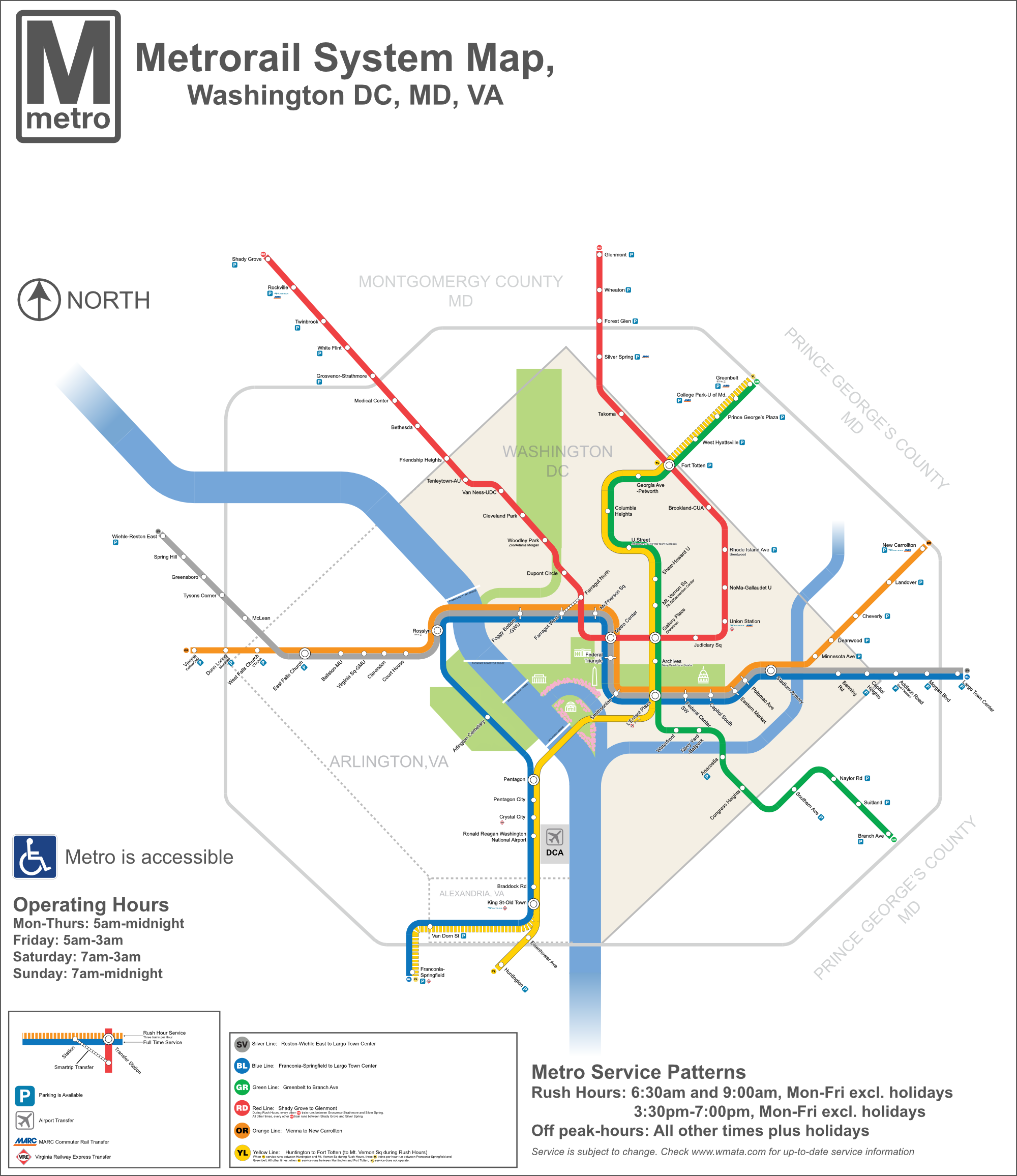
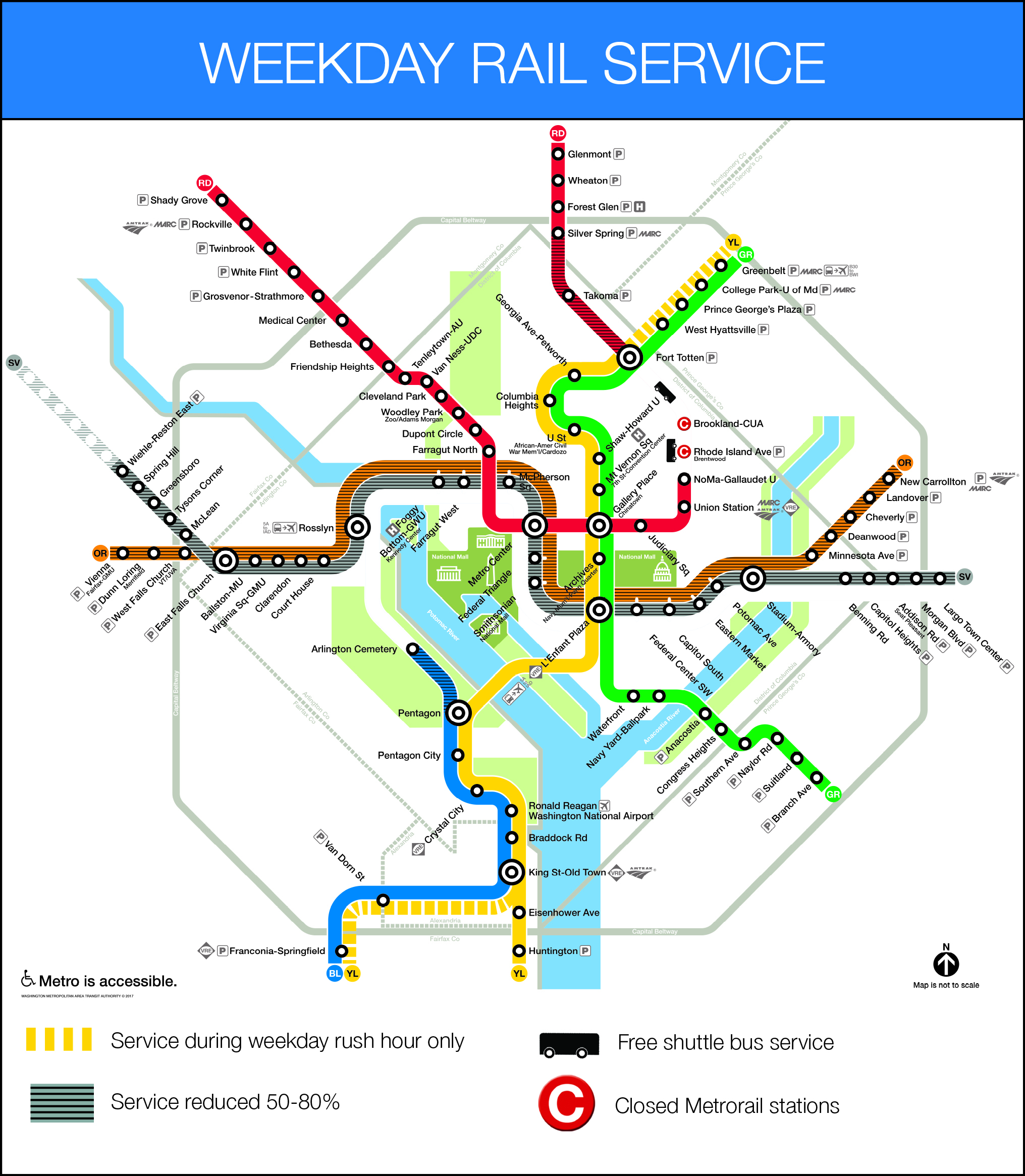
- Lines and Colors: The map showcases six distinct Metro lines, each represented by a specific color: Red, Orange, Blue, Silver, Yellow, and Green. This color-coding system simplifies route identification and allows for quick visual comprehension.
- Stations: Each station is marked with a unique symbol, usually a circle or a square, representing its location and accessibility. Stations are labeled with their corresponding names, providing clear identification.
- Transfer Points: The map highlights key transfer points, where passengers can seamlessly switch between different lines. These transfer stations are denoted by a special symbol, typically a star or a diamond, facilitating efficient travel between destinations.
- Directionality: Arrows indicate the direction of travel on each line, ensuring clarity for passengers navigating the system.
- Accessibility Features: The map incorporates symbols representing accessible stations, providing valuable information for individuals with mobility limitations.
- Zone System: The WMATA system operates within a zone-based fare structure. The map displays the different fare zones, helping passengers calculate their travel costs.
Navigating the System: A Step-by-Step Guide
- Identify Your Destination: Locate your desired destination on the map. Pay attention to the station name and the line it is situated on.
- Determine Your Starting Point: Find your current location on the map. Identify the station you will be departing from and the corresponding line.
- Plan Your Route: Trace the line connecting your starting point to your destination. Note any transfer points along the route.
- Confirm Direction: Ensure you are traveling in the correct direction by checking the arrows on the map.
- Utilize Transfer Stations: If your route involves a transfer, follow the map’s guidance to locate the designated transfer point and switch lines accordingly.
- Check Accessibility: For individuals with mobility limitations, consult the map for accessible stations and elevators.
- Confirm Fare Zone: Determine the fare zone for your journey based on the map’s zone system.
Understanding the Importance of the WMATA Map
The WMATA map transcends its role as a mere navigational tool. It serves as a powerful symbol of the region’s interconnectedness, facilitating efficient travel, economic development, and social interaction.
- Promoting Efficient Travel: The map empowers commuters and visitors to navigate the vast Metro network effectively, minimizing travel time and maximizing productivity.
- Facilitating Economic Growth: By providing a reliable and accessible transportation system, the Metro fosters economic development, attracting businesses and supporting the region’s workforce.
- Enhancing Social Integration: The Metro system, as depicted on the map, connects diverse communities, fostering cultural exchange and promoting social cohesion.
- Reducing Traffic Congestion: By encouraging public transportation, the map contributes to reducing traffic congestion on roadways, improving air quality and enhancing the overall livability of the region.
- Connecting to Regional Landmarks: The map highlights key destinations, including museums, monuments, and cultural institutions, facilitating access to the region’s rich history and cultural heritage.
FAQs: Addressing Common Questions
Q: How can I obtain a physical copy of the WMATA map?
A: Physical copies of the WMATA map are readily available at Metro stations, visitor centers, and various businesses throughout the region.
Q: Is the WMATA map available in digital format?
A: The WMATA map is accessible online through the official WMATA website and various mobile applications.
Q: How can I find specific information about a particular station?
A: The WMATA website provides detailed information about each station, including accessibility features, parking availability, and nearby attractions.
Q: Are there any alternative transportation options available in the region?
A: The region offers a comprehensive transportation network, including buses, streetcars, and ride-sharing services, providing alternative options to the Metro.
Q: How can I stay updated on Metro service disruptions or closures?
A: The WMATA website, mobile app, and social media channels provide real-time updates on service disruptions and closures, ensuring informed travel decisions.
Tips for Effective Navigation:
- Plan Your Trip in Advance: Allow ample time for travel, especially during peak hours, and consider using the WMATA trip planner for optimized routes.
- Familiarize Yourself with the Map: Spend time studying the map to understand the layout and key transfer points.
- Download the WMATA Mobile App: The app offers real-time updates, trip planning tools, and fare information.
- Pay Attention to Announcements: Listen carefully to announcements at stations for any changes in service or platform locations.
- Ask for Assistance: If you are unsure about your route, do not hesitate to ask station staff or fellow passengers for directions.
Conclusion: The WMATA Map – A Vital Tool for the Region
The WMATA map serves as a vital tool for navigating the region’s complex transportation network. Its intuitive design, comprehensive information, and accessibility features empower commuters, tourists, and residents alike to explore the diverse cultural, economic, and social offerings of the Washington Metropolitan Area. As the region continues to grow and evolve, the WMATA map remains an indispensable guide, connecting communities, facilitating economic development, and fostering a sense of place within the nation’s capital.

Closure
Thus, we hope this article has provided valuable insights into Navigating the Capital: A Comprehensive Guide to the WMATA Map. We hope you find this article informative and beneficial. See you in our next article!